Staying in Alnwick
Reading a Guest House Tariff
Per person or per room, single supplements, seasonal bands and what is usually included: how to read the tariff of a small Alnwick guest house.
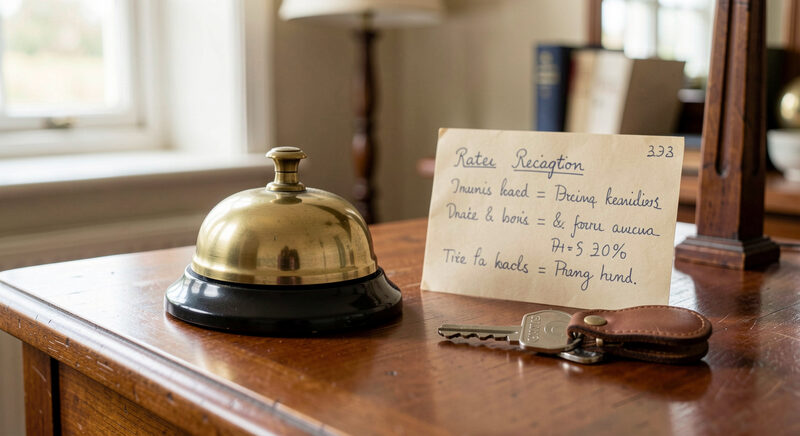
A guest house tariff in a town like Alnwick is a small document that rewards reading. Unlike a hotel booking engine, which hides its logic behind dynamic pricing, a small house publishes a price structure a visitor can actually learn: seasonal bands, per room or per person rates, single occupancy supplements and the extras that do or do not come included. This guide explains how to read it, without quoting prices that change from house to house and year to year.
Per room or per person: which basis applies?
Small guest houses historically priced per person per night, a habit that survives in some houses and explains why a tariff card lists a figure that looks low until two people occupy the room. Others have moved to a per room nightly rate with the occupancy stated. The first question on any tariff is which basis applies, because a per person rate and a per room rate are not comparable numbers. A room priced per person also changes the maths for a family occupying it differently.
Why does a single traveller pay more per head?
The single supplement exists because a double room sold to one person loses the second breakfast and the second half of the room's earning. Some houses charge the full double rate for single occupancy at peak times, some apply a supplement, and a few keep dedicated single rooms that avoid the issue entirely. Solo travellers do best in houses with true single rooms, and shoulder season bookings give more room to negotiate than July and August, when every bed in town fills.
How do seasonal bands work in Alnwick?
Alnwick's season follows its sights. Peak runs through the summer holidays when the castle and garden draw day visitors and when coast traffic peaks, roughly July through early September. Shoulder seasons in spring and autumn bring walkers and heritage visitors, and winter is quietest, when some small houses close entirely for their own holidays. A tariff usually prints two or three bands, and a midweek booking outside school holidays often sits in the lowest. Events in the castle grounds can create short local peaks that a printed band does not show, so checking dates against what is on at the castle and garden is worthwhile.
What is usually included in the rate?
Breakfast is the defining inclusion in a bed and breakfast rate, and its quality is part of the value rather than a free extra, as the breakfast guide makes clear. Parking, where the house has it, is normally included but should be confirmed given the town's layout. Room-only rates exist, especially in houses that no longer cook, and they price lower but move breakfast spending to the town's cafes, which is not a bad trade for early risers heading out.
What about minimum stays and deposits?
Two night minimum stays are common at weekends and in high season, because a one night Saturday booking blocks a two night sale. Deposits vary: some houses take the first night on booking, others ask for card details only. Cancellation terms in small houses are shorter than hotel chains but real, since a cancelled room in a six bedroom house is a large share of a week's trade. Reading them at booking costs nothing and matters most for winter trips when weather can intervene.
What do the extras and small print actually cover?
A tariff's footnotes tell a visitor how the house runs. Charges for dogs, where dogs are accepted, cover the extra cleaning a bedroom needs after a muddy Cheviot walk. Packed lunches, where offered, exist because half the guests leave at seven for the coast path. An honesty bar or a guests' lounge listed on the tariff signals a house that still runs on the older model of trust, the same model that once kept a cellar bar under a Bondgate townhouse. Evening meals are rare in small houses now, since the town's restaurants fill that role, but a few houses keep a cold supper tray for walkers who arrive late.
How does the price compare with alternatives?
Against self-catering, the B&B rate buys service: cooked breakfast, a made bed, local knowledge at the table. The comparison guide weighs that trade for different trip shapes. Against a hotel, the comparison barely applies inside Alnwick itself, since the town's accommodation is overwhelmingly the hosted kind. The realistic choice is between houses and between seasons, and a tariff read carefully, the way the accommodation guide suggests, usually reveals which house has thought hardest about what a guest actually uses.