Staying in Alnwick
What the Rooms of an Old Townhouse Tell You
Sash windows, chimney breasts, creaking stairs and rooms at the back: how to read the bedrooms of a Georgian guest house before you book a night.
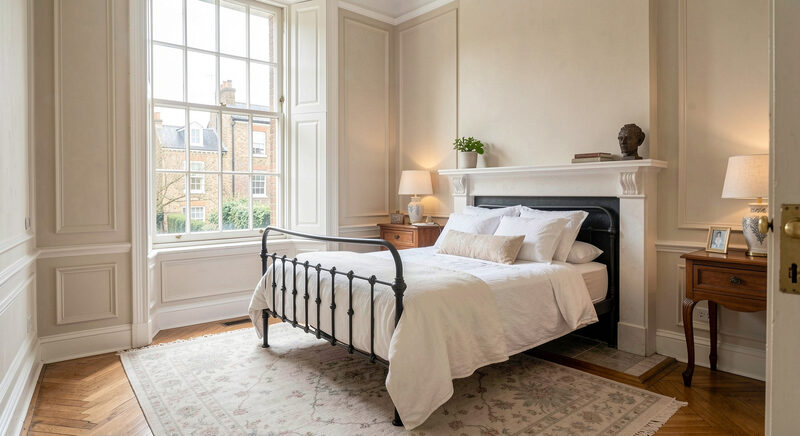
Bedrooms in an old townhouse guest house do not read like hotel rooms. They were built as family rooms in houses designed between the late eighteenth and late nineteenth centuries, and each one carries the decisions of the building: where the chimney breast runs, which wall the window sits in, how the stairs turn. Learning to read a room description before booking is mostly learning to read the house behind it.
What do front and back rooms actually mean?
In a street like Bondgate Without, a front room looks over the pavement towards the town gate or the road north. It takes the morning or evening light depending on the side of the street, and it takes a share of street sound too, modest in a town this size but real on a market day. A back room faces the yard or the garden. Historically the quieter choice, and in houses with walled gardens it is also the prettier view, over old brick walls, fruit trees and the roofs of former stables and coach houses.
Why does the floor matter more than the view?
Georgian and Victorian houses stack their rooms vertically, and there is rarely a lift. A first floor room means one flight of stairs; a second floor room can mean two or three flights with a turn or a narrow landing, which matters for heavy bags and for knees. Houses that added a third storey late, as many Alnwick townhouses did in the 1890s, often have slightly smaller rooms and lower ceilings up there. The trade is usually a better view over the rooftops towards the castle or the moors.
What does en-suite really cover?
In a converted house, en-suite bathrooms are inserted where space allowed: a corner of the bedroom, a former dressing room, a space carved from a landing. Expect showers more often than baths, and compact rooms more often than grand ones. A listing that says a room shares a bathroom is worth a second look at how many rooms share it, since the old pattern of several bedrooms to one landing bathroom still survives in the smallest houses. When it works, an en-suite inserted into an eighteenth century room is one of the quiet luxuries of the form: hot water in a house that predates plumbing by a century.
How big is a room in a house like this?
Main house bedrooms in a Georgian townhouse are generous by modern hotel standards, because they were built as the principal rooms of a family. Ceiling height does the work: a room that is modest in floor area still feels large under a three metre ceiling with a tall sash window. Converted stable and coach house rooms are different again, often at ground level with their own door, which suits visitors who want to come and go without crossing the family hall.
What do the details in the photos tell you?
Listing photographs reward a slow look. A fireplace, even a sealed one with a cast iron insert, confirms the age of the room and usually means a chimney breast that takes a slice out of the floor plan. Sash windows with their original shutters mean real darkness at night and characterful draughts in winter, which good houses manage with lined curtains and decent heating. A room photographed with its own key on a brass fob suggests the kind of house where the tariff is still handwritten, something the guide to guest house tariffs explains in detail.
What about noise, heat and light in an old building?
Old houses have their own climate. Sash windows rattle in a north wind and pass more street sound than sealed units, which is why the back rooms over the garden exist and why they book first. Heating in a stone house with high ceilings matters in the shoulder seasons: a listing that mentions the boiler or shows radiators under the windows is telling you the room was designed to be warm, not merely furnished. Original shutters, where they survive, give the best blackout a Georgian room can offer; lined curtains do the same job where the shutters are painted shut.
Sound travels differently through a house that was built before corridor hotels existed. Creaking boards on the stairs are the honest sound of a timber floor, and most small houses quieten early because the owners live there too. Light sleepers do well to ask for a room away from the stairs, a request hosts in small houses can usually grant.
Which questions are worth asking before booking?
Three questions settle most doubts. Which floor is the room on, and how many stairs. Whether the bathroom is en-suite or private across a landing. And where the car goes, because in the old centre parking is often a courtyard space or a permit rather than a forecourt. A house that answers those three clearly in its listing, the way the staying in Alnwick guide suggests reading them, is usually a house run with the same clarity in person.
After the room, the morning table is the other half of the stay: what a Northumberland breakfast involves is its own subject.