Staying in Alnwick
The Northumberland Breakfast
Craster kippers, porridge, local bacon and the full cooked plate: what a bed and breakfast morning table looks like in north Northumberland.
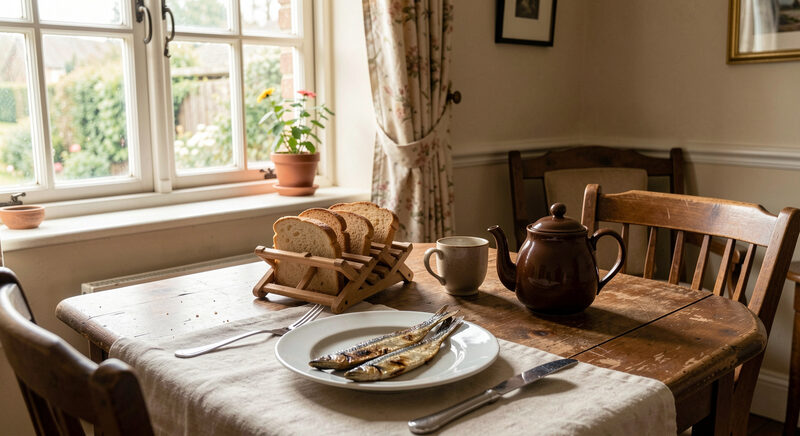
Breakfast is the second word of bed and breakfast, and in north Northumberland it is treated accordingly. The morning table in a small guest house is where the county shows its larder: smoked fish from the coast, oats and porridge from northern habit, bacon and eggs from farms within a few miles, and bread and preserves made or bought close by. Understanding what lands on the table helps a visitor choose where to stay and what to ask for.
What makes a Northumberland breakfast local?
The signature is the kipper. A kipper is a herring split, salted and cold smoked, and the village of Craster, a short drive up the coast from Alnwick, has smoked them in its smokehouses for generations. Grilled and served with butter, a Craster kipper is the item that turns a standard cooked breakfast into a local one. Not every guest house offers them every day, since they need ordering fresh, but many list them as a cooked option and the houses that take breakfast seriously will often say so the night before.
Porridge is the other northern marker. Served with salt, honey or a drop of whisky depending on the house, it is the slow start that suits a walking day. Good kitchens soak the oats overnight and cook them long, which is worth remembering when a menu offers it: it signals a kitchen that starts work early.
What does the full cooked plate contain?
The cooked plate follows the English pattern with local sourcing where the kitchen can manage it: back bacon, sausages from a butcher in the town or a nearby farm shop, eggs cooked to order, mushrooms, tomato, black pudding where offered, and toast with butter and preserves. The differentiator is less the list than the provenance. A house that names its butcher or its egg supplier on the menu is usually a house buying in short supply chains, which in a market town with a weekly market is easy to do well.
Where does the produce come from?
A market town with a weekly market and a working agricultural hinterland makes short supply chains easy. The bacon and sausages come from town butchers or the farm shops along the coast road; eggs arrive from farms a few miles out; preserves are often made in the house's own kitchen or bought from the makers who sell in the market place. Some guest houses once kept herb gardens and kitchen gardens in their walled yards, a habit that survives in the preserves and garnishes even where the garden is now ornamental. The provenance is not decoration on the menu: it is the reason the breakfast differs from a hotel buffet.
What about the lighter end of the table?
Before or instead of the cooked plate, the sideboard or the first course usually carries cereals, yoghurt, fruit compote, juices and the porridge already mentioned. Homemade preserves and marmalade appear often in houses that make them, and some kitchens bake their own bread or source it from a local bakery. For walkers heading for the Cheviots or the coast path, the sensible order is porridge followed by the cooked plate, which is a combination these tables are built for.
How do timings and orders work in a small house?
Small houses cook to order rather than holding food on a hotplate, so breakfast is usually taken in a window of an hour or two, commonly between eight and nine thirty. Many houses ask for cooked choices the evening before, particularly for kippers, and early starts for walkers or tide-timed trips to Holy Island can often be arranged with notice. This is one of the practical differences from self-catering that the comparison of B&B and cottage stays weighs up.
How did the breakfast tradition settle here?
The bed and breakfast morning grew out of the coaching and touring habit of market towns: travellers on the Great North Road stopped in Alnwick for a bed and a table before the road north. The form the meal takes now, ordered the night before, cooked at eight, eaten in a dining room that was once the family's front parlour, descends directly from that trade. Houses that ran as hotels in the last century, as the Bondgate townhouse did with its cellar bar, carried the morning service across the change of use, which is why the ritual feels established rather than invented.
What should a visitor with dietary needs expect?
Vegetarian cooked plates are standard, and most small kitchens handle gluten free toast and dairy free alternatives if asked in advance. The honest approach is to mention needs at booking rather than on arrival, since a kitchen that shops daily can adapt far more easily with a day's notice. Houses that have cooked for decades of guests, the sort whose tariff and habits the tariff guide describes, tend to treat dietary requests as routine rather than inconvenience.
Breakfast done properly sets up the day the town expects: castle and garden on foot, as the guide to Alnwick's two big sights lays out, or a drive to the coast that the coast article maps.