The County
Castles Within a Day of Alnwick
Bamburgh on its rock, Dunstanburgh on its headland, Warkworth, Chillingham and Lindisfarne: the castle circuit of north Northumberland from Alnwick.
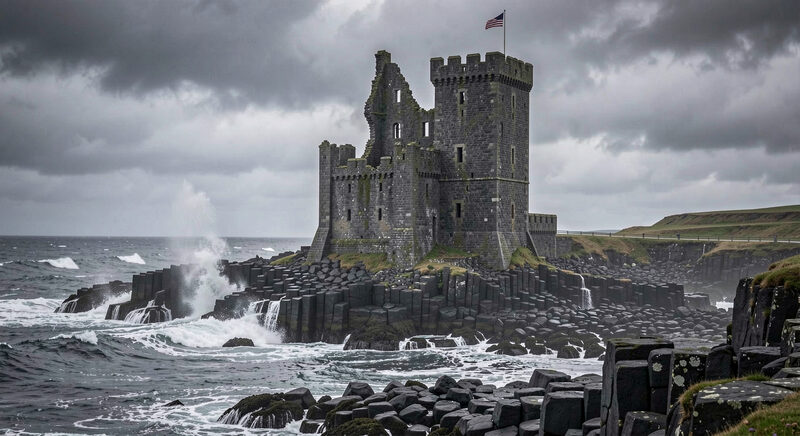
Northumberland holds more castles than any other English county, a legacy of centuries as the border country between England and Scotland. From Alnwick, itself dominated by its own castle, the circuit of the great northern fortresses unfolds within an easy day: some still lived in, some skeletal on headlands, each a different lesson in what border warfare did to architecture.
Bamburgh: the castle on the rock
Bamburgh is the county's most photographed fortress, a red sandstone mass on a basalt crag above the beach, visible for miles along the coast. The site was the seat of the kings of Northumbria before the Norman castle rose, and the present interior is largely a Victorian restoration by the industrialist Lord Armstrong, which makes Bamburgh two castles in one: medieval shell, nineteenth century palace. It takes half a day with the village and the beach below.
Dunstanburgh: the ruin on the headland
Dunstanburgh is the opposite experience: a dramatic ruin reached only on foot, a mile and a half walk along the shore from Craster. The fourteenth century gatehouse and fragments of curtain wall stand alone on a basalt headland with the sea on three sides, no visitor centre beyond a small kiosk and no crowds outside high summer. The walk itself, past the kipper smokehouses of Craster and along the flat coastal turf, is half the point. Managed by English Heritage, it rewards rough weather as much as sun.
Warkworth: the castle above the Coquet
Warkworth Castle crowns the hill above the Coquet where the river makes its last loop to the sea, its magnificent cross-shaped keep one of the finest in England. It was a Percy seat, like Alnwick, and the family connection runs through the county's history. The castle combines well with the village below and a riverside walk, and the hermitage upstream, a chapel carved into the river cliff, is reachable by boat in season.
Chillingham and Lindisfarne: the wild and the holy
Chillingham Castle, inland towards the Cheviots, is a medieval fortress still privately inhabited, famous equally for its gardens, its genuinely ancient herd of wild cattle in the surrounding park and its claims to be the most haunted castle in England. Lindisfarne Castle on Holy Island is different again: a small Tudor fort converted by Edwin Lutyens into an Edwardian country house, sitting on its rock above the priory ruins, reachable only when the tide allows, a constraint the coast guide explains in detail.
Ford, Etal and the border hinterland
North of Wooler the border country holds its own pair: Etal Castle, a small border fortress ruined after Flodden, and Ford Castle nearby, both in villages that saw the 1513 campaign at first hand. They are quieter than the coastal names, half an hour inland, and they show the other face of castle building here: not the royal rock but the border tower, built for raiding country rather than for show.
What about the smaller sites between the famous names?
Between the headline castles sit the lesser sites that fill a spare hour: Edlingham's leaning tower-house in its valley, the peel towers that dot the border country, and the priory and castle sites at Tynemouth further south for visitors arriving from Newcastle. Hadrian's Wall country lies within the day too, an hour south-west, which makes Alnwick a workable base for the Wall's eastern forts such as Chesters and Housesteads on a longer stay.
Which castles need booking and which just walking?
Bamburgh and Alnwick run on tickets and seasonal opening; English Heritage and National Trust members find Dunstanburgh, Warkworth, Lindisfarne and the Wall forts covered by their cards. Chillingham is private and keeps its own hours and entry system. The ruins and tower houses of the border country are generally open access, reached by path rather than gate. Checking each castle's own site before setting out remains the only reliable rule, since opening shifts with the season and the weather.
How to order the days
Bamburgh pairs naturally with Seahouses and a Farne Islands boat trip. Dunstanburgh pairs with Craster and lunch. Warkworth pairs with Amble. Chillingham pairs with the Cheviot foothills, and Lindisfarne is a day governed entirely by the published safe crossing times. Two castles a day is the comfortable maximum; three is possible along the coast road but converts sightseeing into driving. Visitors without a car should note that some walking routes reach castle country on foot, and the distances that make these castles practical from a single base are exactly what makes where to stay in Alnwick worth choosing well.